
MTA-STS Explained: HTTPS for Your Email
MTA-STS is like HTTPS for email in transit. Here is what it does and why it matters.

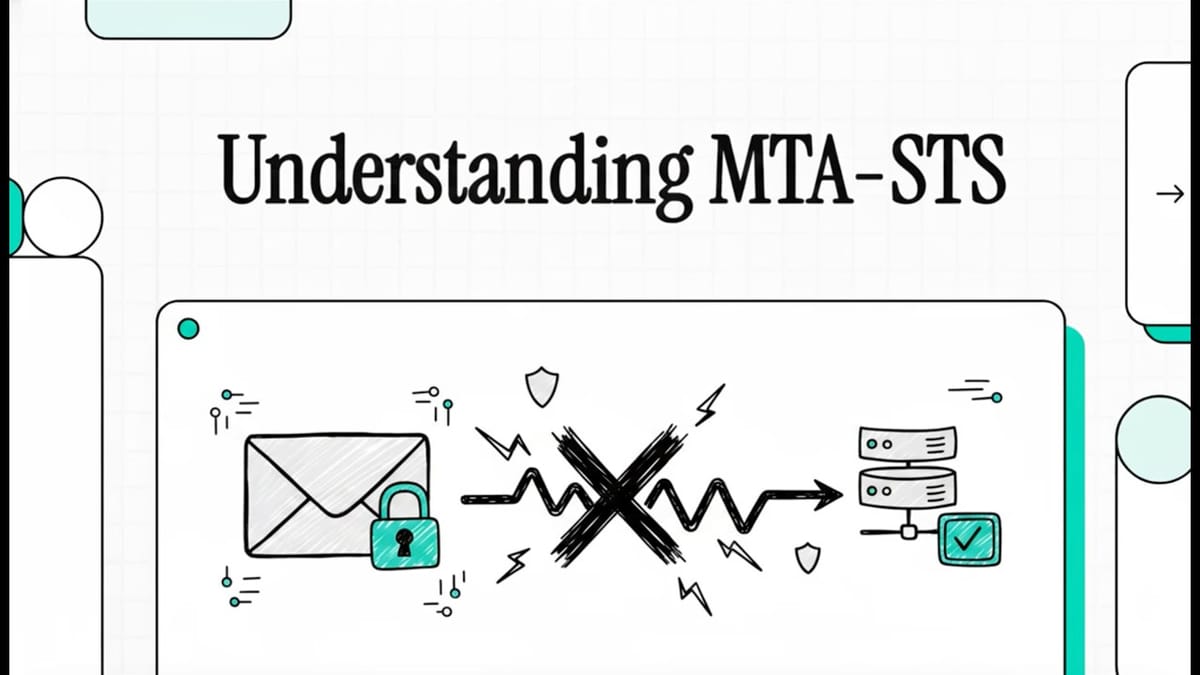
You would not send sensitive data over a website without HTTPS, yet email between servers can still fall back to an unencrypted connection. MTA-STS closes that gap by insisting your mail is delivered over a secure, verified channel.
What this short video covers
- What MTA-STS is, in plain English
- Why email between servers can quietly downgrade to no encryption
- How MTA-STS forces TLS and blocks downgrade attacks
- How it works alongside DMARC, SPF and DKIM
- Why a broken policy can stop your mail, so it needs monitoring
When one mail server hands a message to another, it should use TLS encryption, but older standards allow a silent fallback to plain text if encryption is not available. That fallback is exactly what an attacker in the middle can force, exposing your email in transit. MTA-STS tells the world that your domain requires TLS and refuses the downgrade.
Think of it as HTTPS for email delivery. It is published as a policy that sending servers check before they deliver to you. Because a misconfigured or expired policy can interfere with delivery, MTA-STS is something to set up carefully and then monitor, so it protects your mail without ever blocking it.
Start your free health checkSubscribe for £39 per domain, per month

Founder of SealedMail and a UK email-security specialist in DMARC, SPF, DKIM and email authentication for regulated sectors. He personally reads the DMARC and TLS reports behind every SealedMail account and writes the company's plain-English guides. More from Shaun Cooke →
