
Is Your Email Actually Signed? DKIM Monitoring
DKIM proves your email really came from you, but only if it stays valid. Here is why it needs monitoring.

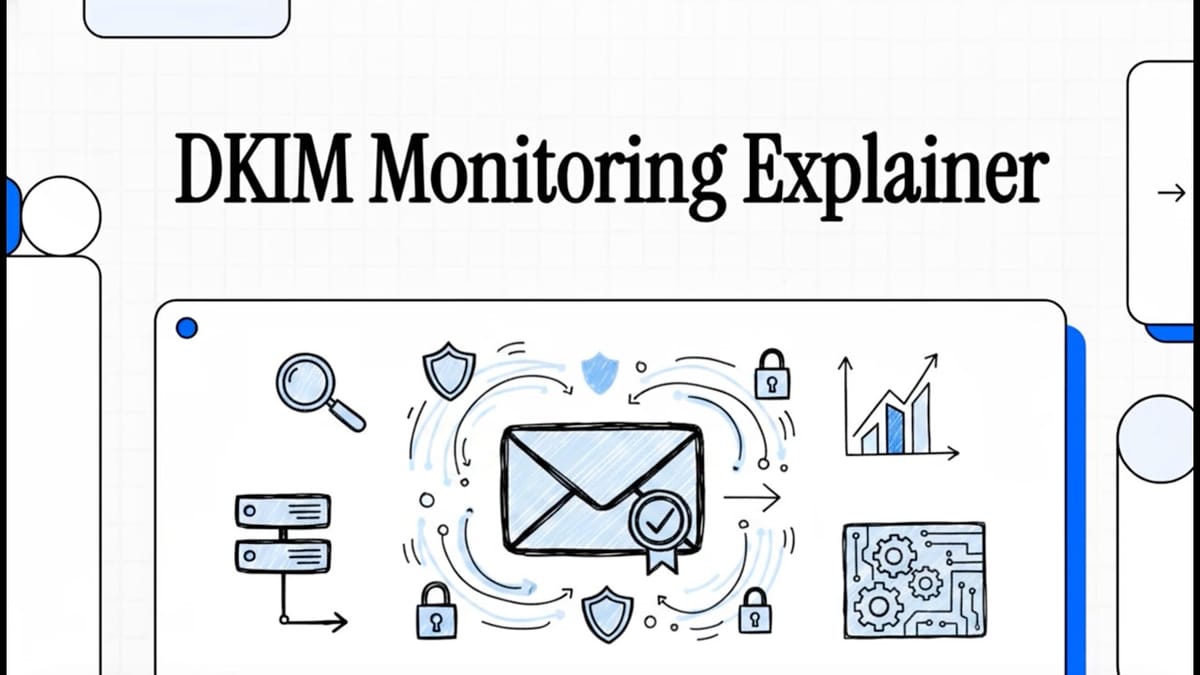
DKIM is the cryptographic signature that proves an email genuinely came from your domain and was not tampered with in transit. Like any signature, it only helps while it is valid, and it can break without warning.
What this short video covers
- What DKIM does and why receivers trust a valid signature
- How a rotated or removed key silently breaks DKIM
- Why adding a new sending tool can introduce unsigned mail
- How broken DKIM weakens DMARC and your deliverability
- Why monitoring catches signing problems before they spread
DKIM works by signing your outgoing email with a private key, while receivers check it against a public key in your DNS. A valid signature tells them the message really came from you and was not altered. The problem is that keys get rotated, providers change, and new tools start sending on your behalf without being signed.
When DKIM breaks, your messages lose a key trust signal, your DMARC results suffer, and deliverability can quietly slip. Monitoring your DKIM across every service that sends in your name means you find a signing gap quickly, rather than discovering it from a drop in delivery weeks later.
Start your free health checkSubscribe for £39 per domain, per month

Founder of SealedMail and a UK email-security specialist in DMARC, SPF, DKIM and email authentication for regulated sectors. He personally reads the DMARC and TLS reports behind every SealedMail account and writes the company's plain-English guides. More from Shaun Cooke →
