
Top 3 Email Reputation Check Services 2026

Email reputation monitoring is often unreliable when automated dashboards fail to deliver clear reports suitable for audits or investigations. Most services lack manual review or deliver inconsistent alerts, leaving gaps in compliance evidence and ongoing protection. This comparison covers the reporting methods, support level, and pricing across leading DMARC monitoring services so organisations can choose the best fit for their technical capacity and audit needs.
Table of Contents
SealedMail
At a Glance
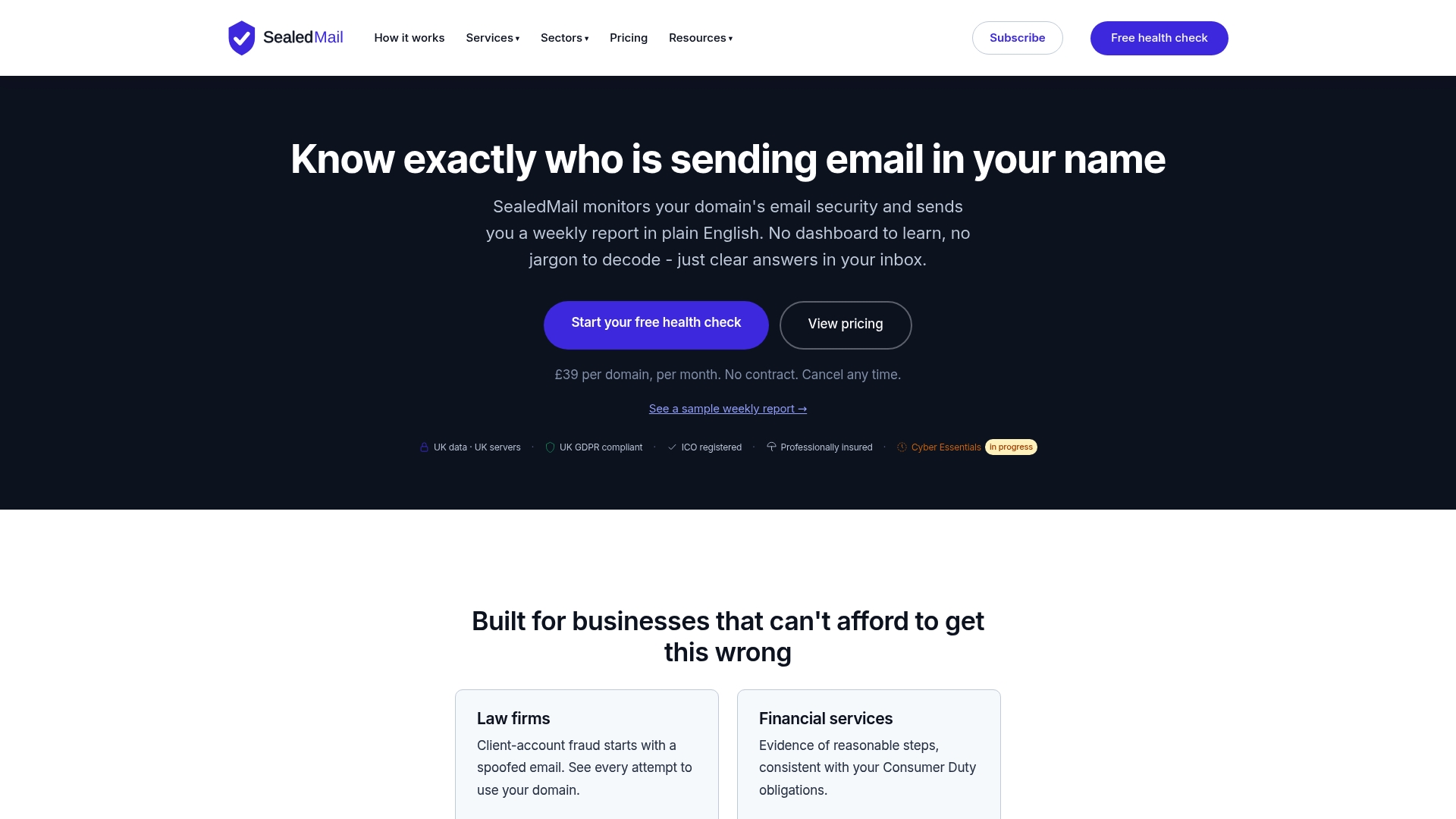
SealedMail issues weekly, plain English reports that are manually reviewed by a UK email security specialist. The service focuses on monitoring who sends mail from your domains and flags spoofing, DNS health problems and blacklisting. It targets law firms, financial services, healthcare providers, accountants and charities.
Core Features
SealedMail monitors core email authentication and transport signals, including DMARC, SPF and DKIM, and checks protocol records such as MTA‑STS, TLS‑RPT and BIMI. The service also runs DNS health checks and verifies blacklisting status while producing audit‑ready report formatting for compliance evidence. Each weekly report receives manual interpretation by a UK specialist rather than an automated dashboard.
Key Differentiator
Manual, plain-English weekly reports are delivered and interpreted directly by a UK email security specialist rather than pushed into an automated console. That human review focuses the findings into concise guidance and evidence suitable for audits and investigations. The model removes the need to train internal teams on complex dashboards.
Pros
SealedMail offers personalised expert support from the founder, Shaun Cooke, who personally reviews DMARC output and explains the findings in clear language. Reports are deliberately jargon free and formatted to serve as evidence in regulatory or professional audits. The service hosts data in the UK, follows UK GDPR practice, and bills a predictable monthly fee per domain so budgeting is straightforward.
Cons
- Reporting is manual and weekly only, so there are no real‑time alerts or live dashboards for urgent incidents.
Who It’s For
Organisations based in the UK that need defensible evidence of email domain security without hiring an in‑house specialist will find this service appropriate. It suits regulated firms such as legal practices and financial institutions that must demonstrate controls during audits. Small IT teams or non‑technical security leads benefit from the plain English reporting and single point of contact.
Unique Value Proposition
£39 per domain, per month for monitored sending domains makes the cost predictable for firms that manage multiple domains and need regular audit evidence. That flat pricing combined with a single expert review removes hidden consultancy hours and reduces the administrative work of compiling compliance materials. The model lets you buy ongoing assurance rather than one‑off consultancy spikes.
Real World Use Case
A law firm subscribes to SealedMail to watch for unauthorised use of its letterhead domains and to collect formatted DMARC reports ahead of a compliance review. Weekly updates highlight any new senders, failing authentication, or DNS anomalies and provide a clear record suitable for internal risk logs. The firm uses those reports to brief partners and to support regulator queries when they arise.
Pricing
SealedMail charges £39 per domain, per month for actively monitored email sending domains and £15 per month for non‑sending or parked domains. There are no long contracts and clients may cancel at any time.
Website: https://sealedmail.co.uk
PowerDMARC
At a Glance
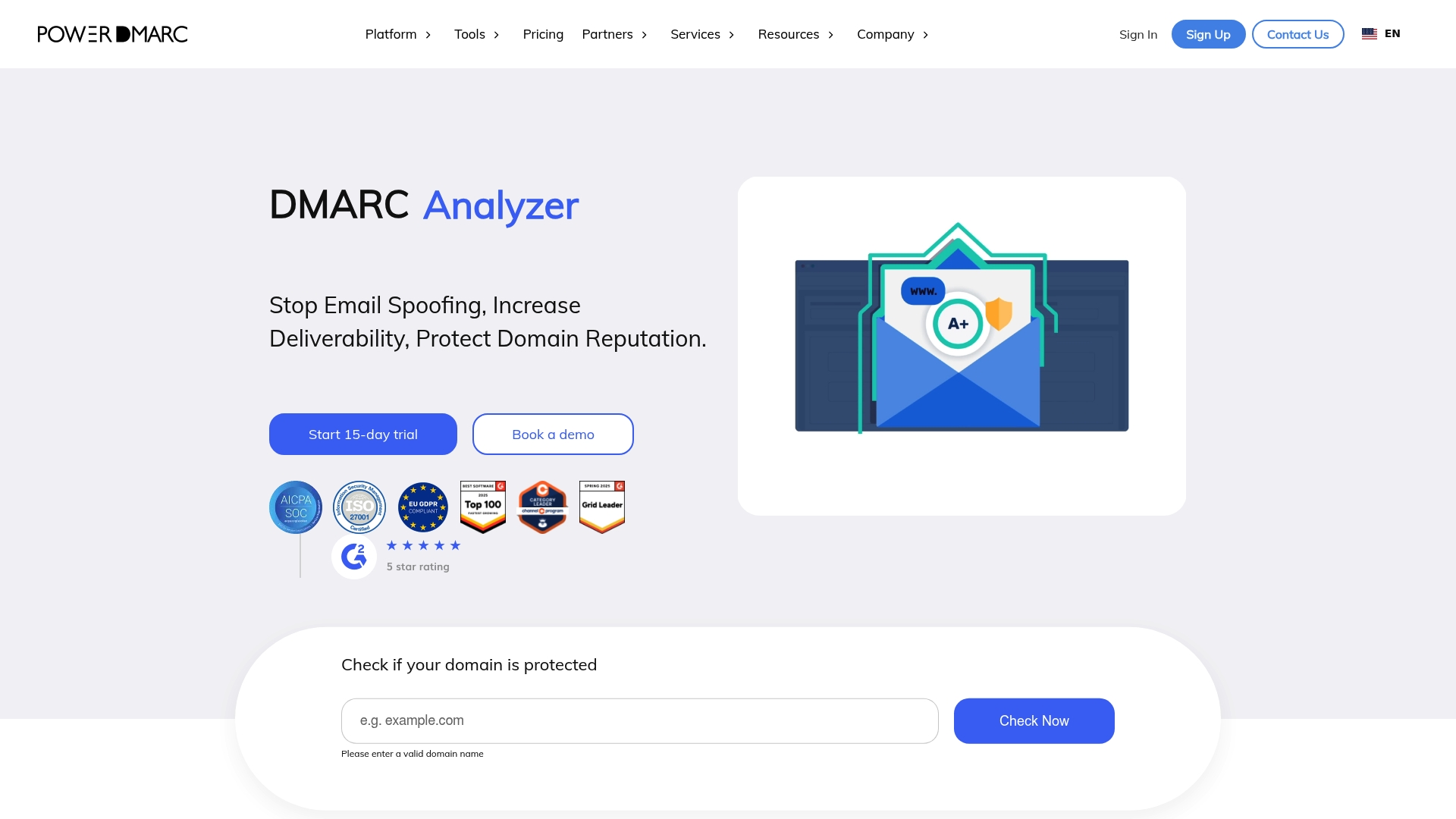
AI powered threat intelligence and automated DNS publishing sit inside a single console. The service combines a live threat map, aggregate and forensic reporting, and capabilities to publish SPF, DKIM, and DMARC records automatically. PowerDMARC’s marketing materials state it is trusted by Fortune 100 companies and governments.
Core Features
PowerDMARC centralises email authentication tools and reporting so you can see DMARC, SPF, DKIM, BIMI, MTA STS, and TLS RPT data in one place. The platform provides aggregate and forensic reports, email header and domain reputation analysis, and a live threat map driven by AI. Managed services include hosted record management and a partner programme with white label options for MSPs and enterprises.
Key Differentiator
The defining feature is the combination of AI powered threat intelligence and automated DNS management within one product. That pairing reduces manual rule changes and surfaces suspicious senders more quickly than tools that only report. The vendor positions the platform for MSPs and large organisations that need white label and multi domain support.
Pros
The console is easy to navigate and groups reporting and enforcement workflows together, which speeds triage. Automated DNS publishing and hosted SPF and DKIM reduce the manual steps required to reach enforcement. Real time threat detection and the live threat map give security teams faster signals, and the partner programme supports MSPs who want to resell or white label the service; that trust claim above aligns with an enterprise focus.
Cons
- Some complexity in initial setup for non technical teams.
- High volume email environments may need extra tuning and configuration.
- Policy changes depend on DNS record propagation times, which can delay enforcement.
When It May Not Fit
Organisations with only a single domain and limited IT support may find the setup effort disproportionate to benefits. Small charities or sole traders that send low volumes of email may not need the partner or white label features. If you require instant policy rollouts, DNS propagation dependency will frustrate that expectation.
Who It’s For
Medium to large organisations, MSPs, and security teams managing multiple domains will get the most value. The platform suits teams that need managed DNS publishing and partner capabilities for resale. Security teams that want both threat intelligence and record management in one place will find this aligned with their workflow.
Real World Use Case
A multinational corporation uses PowerDMARC to monitor traffic across dozens of country domains and to apply strict DMARC policies. The team relies on the live threat map to spot spoofing attempts and on automated DNS updates to reduce manual errors. The partner programme lets the organisation offer reporting to subsidiaries under a white label.
Pricing
Pricing details are not published in this entry. The vendor lists product capabilities and partner options but does not provide a public pricing table here.
Website: https://powerdmarc.com
yourDMARC
At a Glance
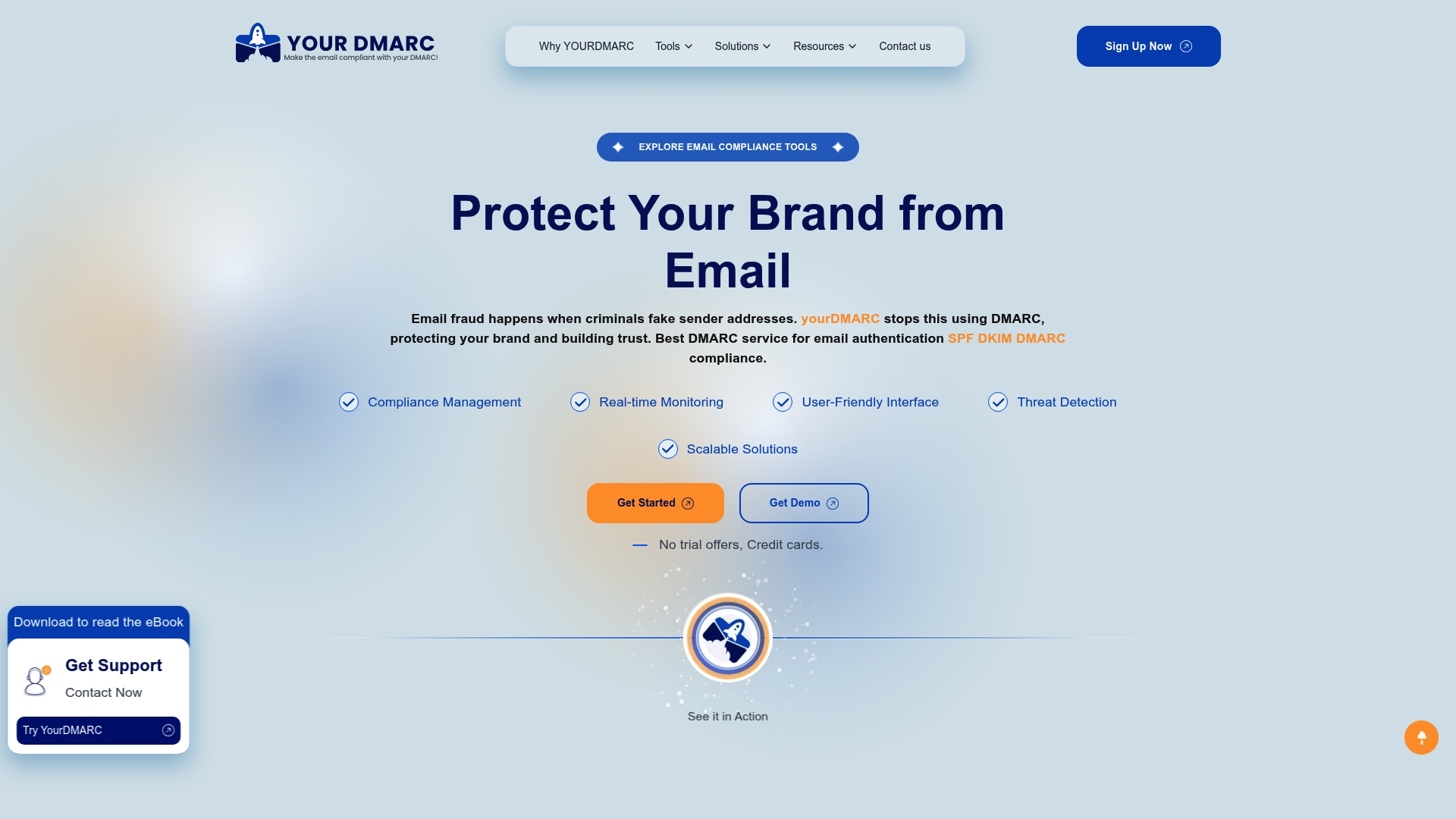
The platform advertises end-to-end automated management for DMARC, SPF and DKIM across many domains. yourDMARC pairs automated enforcement with live threat alerts and reporting dashboards. The result targets organisations that need ongoing authentication without constant manual checks.
Core Features
yourDMARC bundles record verification and guided record generation for DMARC, SPF and DKIM, plus DNS lookups across common record types. The platform adds blacklisting checks and reputation monitoring with alerts, and presents activity on real-time dashboards. Migration assistance and industry templates aim to speed initial setup for teams with limited staff.
Key Differentiator
The standout claim is fully automated policy management tied to threat detection and analytics. That combines continuous enforcement of authentication records with live alerts for blacklisting or suspicious mail flows. Compared with Sealedmail’s human-reviewed weekly reports, this product favours automation and scale over bespoke manual analysis.
Pros
The onboarding path and guided workflows reduce friction for IT teams and in-house admins, making setup quicker than baring raw DNS changes. Automated record generation and enforcement lower the manual work of maintaining SPF, DKIM and DMARC records while live blacklisting alerts cut the time between detection and response. Multiple industry templates and migration help make policy rollout less error prone for organisations moving from ad hoc setups.
Cons
- Some advanced administrators will find limited options for deep custom configuration of authentication rules.
- Pricing may stretch very small organisations or early-stage startups.
- The service depends on accurate DNS record changes; incorrect DNS edits can trigger false positives or missed protection.
When It May Not Fit
If your organisation needs a single expert to review DMARC details weekly, this automated approach may feel impersonal. Teams requiring highly bespoke rule sets or unusual DNS setups will face configuration limits. Small teams with near-zero budget could find cheaper monitoring-only tools more suitable.
Who It’s For
Large organisations and managed service providers that want automated enforcement and continuous monitoring will benefit most. In-house security teams with limited headcount will find the guided setup and templates useful. Companies that prefer automation over manual, expert-driven reports will get better fit.
Real World Use Case
A hospital trust used the platform to roll out DMARC and monitor outbound mailstreams across multiple domains. The vendor states that the customer achieved HIPAA compliance during the rollout. That claim is presented as the vendor reports it. The product then flagged a blacklisting event and sent alerts to the trust’s security team, which reduced fraudulent mail appearing to come from internal addresses.
Pricing
Plans range from a free tier with basic checks to tiered professional packages up to enterprise pricing near $599.99/month. Exact feature tiers and enterprise quotes are listed on the vendor website.
Website: https://yourdmarc.com
Comparison of alternatives
For organisations prioritising human expertise in email security reporting, SealedMail stands out for its interpreter-reviewed weekly reports designed to meet regulatory and audit requirements. However, alternatives like PowerDMARC and yourDMARC offer unique strengths in automation and real-time reporting.
Reporting vs Automation
SealedMail differentiates itself with manual review by UK email specialists. This model guarantees reports are custom-tailored for understanding by non-technical leads. In contrast, both PowerDMARC and yourDMARC focus on automated tools like live threat detection and generalised reporting dashboards. These automated systems are well-suited for environments requiring ongoing monitoring with limited human intervention, but small-scale or non-technical efforts might find them less accessible.
Setup Complexity
YourDMARC simplifies initial configuration through guided workflows and templates tailored to multiple industries, addressing the needs of organisations implementing DMARC for the first time. PowerDMARC, while also offering guidance, includes advanced features for managing large-scale implementations across multinational setups, albeit with more challenging onboarding for non-technical teams. SealedMail, meanwhile, eliminates onboarding difficulties by managing technical details and communicating findings, ideal for organisations without dedicated IT specialists.
Best fit
- Legal, financial, or similar regulated organisations needing human-reviewed security reports will find SealedMail addresses their needs with tailored insights useful for audits.
- Medium to large organisations or managed service providers requiring immediate issue visibility should evaluate PowerDMARC due to its live threat map and AI-driven insights.
- Organisations opting for automated, scalable DMARC setup and enforcement with predefined templates will benefit from yourDMARC’s configurations and monitoring systems.
Our pick
SealedMail presents a unique approach by delivering manually interpreted, plain-English reports evaluated by UK specialists, designed with regulatory compliance in mind. Its simplicity and expert touch are for organisations requiring contextual reporting without sparing resources for technical training and dashboard management. For organisations aiming to complement domain security practices with expert oversight, SealedMail offers a distinct advantage by its competitors.
Domain security monitoring focuses primarily on providing compliance-ready reports for organisations with varying levels of technical expertise.
| Product | Core Feature | Key Differentiator | Best For | Pricing | Notable Limitation |
|---|---|---|---|---|---|
| SealedMail | Manual audit-ready compliance reports | Expert-reviewed plain-English weekly reports | UK-regulated firms | £39/domain/month | Weekly reports only; lacks real-time alerts |
| PowerDMARC | Comprehensive email authentication tools with live threat detection | AI-powered automated DNS publishing | Medium to large organisations | Price not published | Complex setup for non-technical teams |
| yourDMARC | Automated DMARC, SPF, and DKIM enforcement | Continuous enforcement tied to threat analytics | Large organisations | $599.99/month | Limited customised rule configuration options |
How Can You Confidently Check Your Email Reputation and Prevent Spoofing?
Email spoofing remains a serious threat for regulated firms such as law practices, financial institutions, healthcare providers, accountants, and charities. Organisations often face the challenge of understanding who sends mail from their domains while ensuring compliance with audit requirements. Sealedmail addresses these issues with clear, weekly reports in plain English. These reports are manually reviewed by a UK email security expert, offering precise insights without technical jargon.
Sealedmail’s service monitors DMARC, SPF, and DKIM settings, along with DNS health and blacklisting, so your organisation can detect unauthorised senders early. This approach fits well for businesses that prefer expert review over automated dashboards and want dependable, audit-ready documentation.
Learn more about Sealedmail’s focused email security monitoring to protect your domains and receive clear guidance from a single expert. Find out how you can secure your organisation against fraud and provide evidence of domain authenticity with one straightforward service.
FAQ
What is the pricing structure for SealedMail?
SealedMail charges £39 per domain, per month for actively monitored email sending domains. This flat pricing allows organisations to budget effectively while obtaining essential weekly reports for compliance evidence.
How does SealedMail compare to PowerDMARC in terms of user experience?
PowerDMARC offers a user-friendly interface that centralises authentication tools, making navigation easy for security teams. SealedMail, on the other hand, provides manual, plain-English weekly reports interpreted by a UK email security specialist, which is better for organisations that prefer personalised guidance.
Which platform provides real-time alerts for email spoofing?
PowerDMARC supports real-time threat detection and offers a live threat map. While SealedMail does not provide real-time alerts, its manual review provides important insights into email security weekly.
Is there an advantage in using SealedMail for regulatory compliance?
SealedMail’s reports are deliberately jargon-free and formatted to serve as evidence in regulatory or professional audits. This makes it particularly suitable for regulated firms that must demonstrate email domain security compliance.
How does SealedMail handle DMARC compliance compared to competitors?
SealedMail generates audit-ready reports that are manually interpreted for clarity, allowing firms to collect tailored intelligence on their DMARC policies. This contrasts with automated services that may rely on standard dashboards without personal review.
Recommended

Founder of SealedMail and a UK email-security specialist in DMARC, SPF, DKIM and email authentication for regulated sectors. He personally reads the DMARC and TLS reports behind every SealedMail account and writes the company's plain-English guides. More from Shaun Cooke →
