
DMARC for Healthcare: NHS DSPT Compliance Made Simple
NHS DSPT compliance includes email security. Here is how DMARC protects patients and simplifies your assessment.

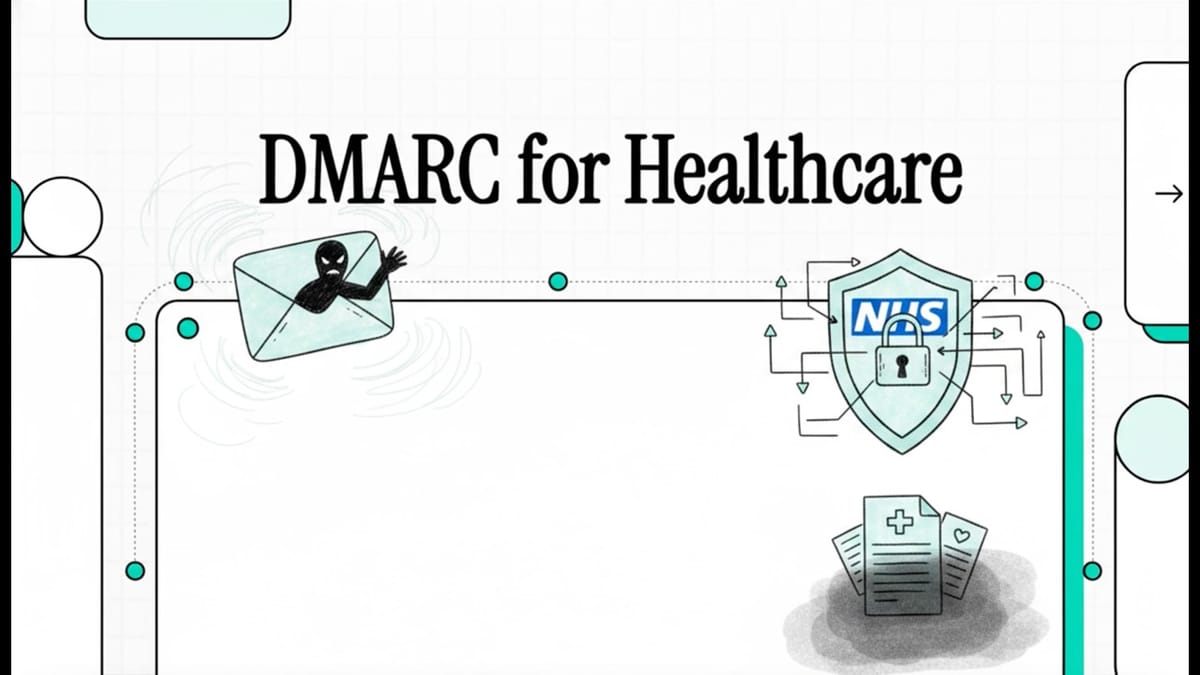
Healthcare organisations handle patient data and depend on trusted communication, which makes email impersonation both a safety and a compliance issue. The NHS Data Security and Protection Toolkit expects appropriate controls, and email authentication is part of that picture.
What this short video covers
- Why healthcare providers are targeted for impersonation and data
- How spoofed email reaches patients and staff using your domain
- What DMARC, SPF and DKIM do in plain terms
- How email authentication maps to NHS DSPT expectations
- Why ongoing monitoring keeps you compliant as systems change
Patients and partners trust messages that appear to come from a clinic, practice or trust. Criminals exploit that trust by forging your domain, sending phishing or fraud that looks entirely legitimate. Without DMARC enforcing, those messages are delivered in your name.
The NHS DSPT expects organisations to manage email and phishing risk, and DMARC is a direct, evidenced way to do it. The work is not complex, but it needs to reach an enforcing policy and be monitored as you add clinical systems, suppliers and tools, so protection does not lapse.
Start your free health checkSubscribe for £39 per domain, per month

Founder of SealedMail and a UK email-security specialist in DMARC, SPF, DKIM and email authentication for regulated sectors. He personally reads the DMARC and TLS reports behind every SealedMail account and writes the company's plain-English guides. More from Shaun Cooke →
